
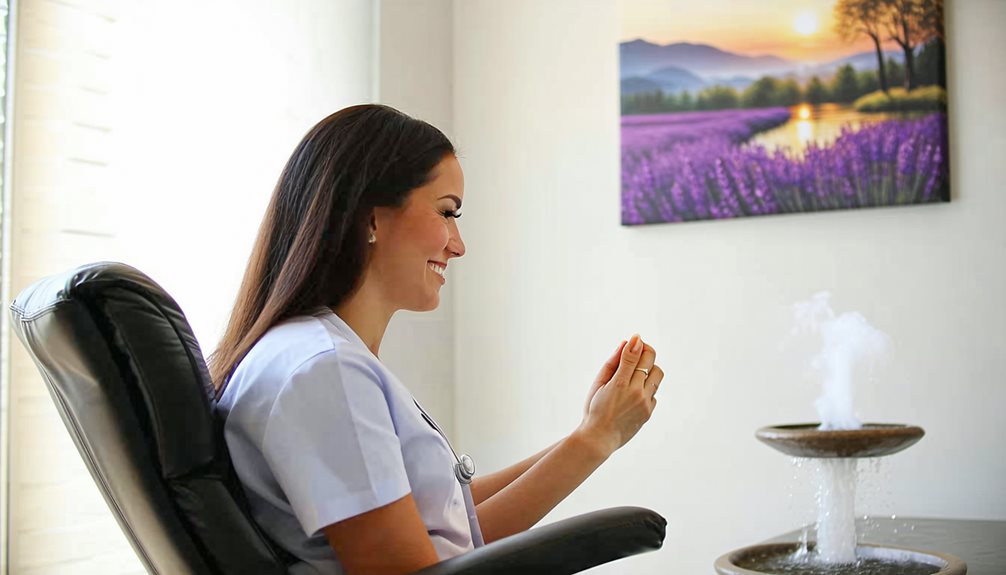
Calming anxious patients involves a multi-faceted approach grounded in evidence-based practices. Understanding individual anxiety triggers, such as past experiences or fear of pain, is essential. Creating a soothing environment with ambient lighting and comforting sounds helps alleviate stress. Effective communication, characterized by active listening and empathetic responses, builds trust and reduces fear. Implementing relaxation techniques like diaphragmatic breathing and mindfulness meditation enhances emotional regulation. For severe anxiety, tailored sedation options provide additional support. Collecting patient feedback fosters continuous improvement in patient care. These strategies collectively guarantee a more tranquil patient experience, with deeper insights available for those interested.
Understanding Dental Anxiety
Understanding dental anxiety is vital for providing effective patient care in dental practices. This pervasive issue affects a significant portion of the population, with varying degrees of intensity influenced by diverse causes of anxiety. These causes may include fear of pain, negative past experiences, or a general distrust of dental professionals. By analyzing these factors, dental practitioners can tailor their approach to meet the specific needs of their patients.
Patient demographics play a significant role in understanding dental anxiety. Research indicates that women tend to report higher levels of dental fear than men, and younger patients often exhibit more anxiety than older adults. Socioeconomic status and cultural background further complicate the landscape, as access to dental care and previous healthcare experiences can shape an individual’s perception of dental visits.
Employing an evidence-based approach to understanding dental anxiety involves recognizing these demographic patterns and psychological triggers. This understanding allows dental professionals to innovate their practices, fostering a patient-centered approach that reduces apprehension.
Creating a Comforting Environment
Crafting a welcoming and soothing dental environment is essential in alleviating patient anxiety and enhancing their overall experience. A thoughtfully designed space can greatly reduce apprehension and foster a sense of calm.
Research supports that sensory modifications can positively influence a patient’s perception of dental care. Here are three innovative strategies to create a comforting environment:
-
Ambient Lighting: Soft, warm lighting can reduce stress and create a tranquil atmosphere. Consider using adjustable LED lights that mimic natural daylight, allowing patients to feel more at ease.
-
Soothing Sounds: Integrating gentle background music or nature sounds has been shown to decrease anxiety levels. Curate playlists that include calming melodies or incorporate sound machines that play ocean waves or forest sounds, offering a distraction from the clinical setting.
-
Comfortable Furnishings: Ergonomic chairs and plush waiting room seating contribute to a comforting physical experience. Additionally, offering blankets or neck pillows can provide patients with a sense of security.
Effective Communication Techniques
Establishing a comforting environment is just one aspect of alleviating patient anxiety; effective communication techniques play an equally important role. Active listening is paramount, as it fosters a connection that goes beyond mere verbal exchanges. By attentively hearing patients’ concerns, healthcare providers can better understand the underlying issues contributing to anxiety. This practice not only validates patients’ feelings but also paves the way for a more personalized care plan.
Research indicates that when patients feel genuinely heard, their stress levels notably decrease, enhancing overall treatment efficacy.
In addition to active listening, employing empathetic responses is essential in reassuring anxious patients. Empathy involves acknowledging a patient’s emotional state and responding in a manner that conveys understanding and compassion. For instance, simple affirmations such as "I understand this is difficult for you" can go a long way in building trust and alleviating fear.
By integrating these communication techniques, healthcare professionals can transform the patient experience, creating a collaborative environment that encourages openness and reduces apprehension.
Innovatively combining active listening and empathetic responses, clinicians can not only calm patients but also foster a therapeutic alliance that promotes healing and well-being.
Implementing Relaxation Strategies
Implementing relaxation strategies can markedly alleviate patient anxiety, with evidence suggesting profound benefits from targeted techniques.
Breathing exercises, for instance, are known to reduce stress by enhancing oxygen flow and promoting a state of calm.
Additionally, mindfulness meditation and guided imagery have been shown to improve emotional regulation and decrease anxiety levels, fostering a more supportive therapeutic environment.
Breathing Techniques Benefits
Breathing techniques, often considered a cornerstone of relaxation strategies, offer significant benefits for calming anxious patients. Among these techniques, diaphragmatic breathing and breath counting stand out as particularly effective.
Diaphragmatic breathing, also known as abdominal breathing, engages the diaphragm to promote full oxygen exchange, consequently reducing stress and anxiety. Evidence suggests that this technique can lower heart rate and blood pressure, fostering a state of calmness and enhancing emotional regulation.
Breath counting, meanwhile, provides a structured focus that can distract from anxious thoughts and promote mindfulness. By counting each breath cycle, patients cultivate awareness of their breathing patterns, which can lead to increased self-regulation and reduced anxiety levels.
Additionally, breath counting serves as a simple, yet powerful tool that patients can use anywhere, providing a sense of control in anxiety-inducing situations.
Benefits of Breathing Techniques:
- Physiological Regulation: Techniques like diaphragmatic breathing can lower physiological markers of stress, aiding in relaxation.
- Enhanced Focus: Breath counting encourages mindful awareness, helping patients detach from anxious thoughts.
- Accessibility and Simplicity: These techniques require no special equipment and can be easily incorporated into daily routines, empowering patients with practical tools for anxiety management.
Mindfulness Meditation Practices
As patients seek to enhance their anxiety management repertoire, mindfulness meditation emerges as a complementary practice to breathing techniques, offering a holistic approach to relaxation and emotional well-being.
Mindfulness meditation practices focus on cultivating awareness and presence in the moment, which can considerably diminish anxious thoughts and promote a state of tranquility. The mindfulness benefits are supported by a growing body of evidence indicating its efficacy in reducing stress and enhancing emotional regulation.
Meditation techniques such as body scans, focused attention, and open monitoring are pivotal in fostering mindfulness. These techniques encourage patients to develop a nonjudgmental awareness of their thoughts and sensations, effectively reducing the impact of anxiety-inducing stimuli.
Studies have demonstrated that regular mindfulness meditation can lead to structural and functional changes in brain regions associated with emotional processing, indicating its profound impact on mental health.
Incorporating mindfulness meditation into clinical practice requires a nuanced understanding of each patient’s unique needs and preferences.
Ultimately, the integration of mindfulness meditation practices can be a transformative component of personalized anxiety management strategies, promoting enduring emotional resilience.
Guided Imagery Exercises
Guided imagery exercises represent a powerful tool in the implementation of relaxation strategies for anxious patients.
This approach leverages visualization techniques to foster a sense of calm and well-being. By engaging the imagination, patients can create mental images that evoke peacefulness, effectively reducing anxiety levels.Research indicates that relaxation imagery can play a significant role in modulating the stress response, promoting both psychological and physiological benefits.
To maximize the effectiveness of guided imagery exercises, consider the following evidence-based practices:
-
Personalization: Tailor the imagery to the patient’s preferences and experiences. Personalized scenarios resonate more deeply, enhancing the relaxation response and increasing patient engagement.
-
Guided Sessions: Utilize professional recordings or trained practitioners to lead sessions. A structured approach guarantees that patients can focus solely on the imagery without distractions, leading to more profound relaxation effects.
-
Integration with Other Modalities: Combine guided imagery with other relaxation techniques like deep breathing or progressive muscle relaxation. This multimodal approach can amplify the benefits, providing a thorough strategy to manage anxiety.
Utilizing Sedation Options
The utilization of sedation options presents an essential consideration in managing anxiety in patients unable to benefit sufficiently from non-pharmacological interventions.
Understanding the various types of sedation, from minimal to deep, allows healthcare providers to tailor their approach based on the patient’s specific needs and anxiety levels.
Adhering to established sedation safety guidelines guarantees both efficacy in alleviating anxiety and the safeguarding of patient health, underscoring the importance of evidence-based practices in clinical decision-making.
Types of Sedation
Sedation serves as an essential tool in the clinical setting, offering a spectrum of options to ease the anxiety of patients undergoing various medical procedures. Among these options, oral sedation and nitrous oxide stand out for their efficacy and adaptability. Understanding these modalities allows healthcare professionals to tailor interventions that address the specific needs of each patient.
- Oral Sedation: Typically administered in pill form, oral sedation is a non-invasive method that provides a calming effect. It is particularly beneficial for patients with moderate anxiety, as it allows them to remain awake while feeling relaxed.
Its ease of administration and absence of needles make it an appealing choice.
- Nitrous Oxide: Often referred to as "laughing gas," nitrous oxide is inhaled and provides rapid anxiolytic effects. This method is advantageous for its quick onset and adjustable depth of sedation, making it ideal for short procedures.
Its reversible nature guarantees a swift recovery, enhancing patient turnover.
- Intravenous Sedation: For more profound sedation, intravenous options offer deeper levels of relaxation. While more invasive than oral or inhaled methods, IV sedation allows precise control over sedation levels, making it suitable for complex procedures requiring enhanced sedation depth.
Sedation Safety Guidelines
Ensuring patient safety during sedation is paramount, and adherence to established sedation safety guidelines is essential in achieving this goal.
Sedation protocols are meticulously crafted to cater to individual patient needs while minimizing risks. The key to effective sedation lies in a dynamic, evidence-based approach that incorporates continuous patient monitoring, allowing for adjustments in real-time should complications arise.
By integrating innovative technologies with traditional practices, healthcare providers can enhance the safety and comfort of anxious patients undergoing procedures.
Empathy plays a significant role in successful sedation; understanding patient history and anxiety levels informs the choice of sedation type and dosage.
It is essential to develop a thorough sedation plan that aligns with existing guidelines, ensuring that all involved staff members are well-trained and aware of potential risks.
The application of cutting-edge monitoring devices allows for precise tracking of essential signs and sedation depth, providing an additional layer of safety.
Moreover, a proactive stance on sedation safety involves regular audits of sedation protocols and embracing advancements in sedation techniques and monitoring equipment.
This commitment to continuous improvement can lead to more efficient sedation practices, ultimately enhancing patient outcomes and satisfaction.
Encouraging Patient Feedback
Cultivating an environment where patients feel comfortable providing feedback is essential in managing anxiety effectively. Implementing strategic measures, such as using patient surveys and feedback forms, can enhance patient engagement, yielding valuable insights into their experiences.
By understanding patient concerns, healthcare providers can adapt practices to alleviate anxiety, fostering a more patient-centered approach. Evidence suggests that incorporating patient feedback not only improves care quality but also builds trust, a critical factor in reducing anxiety.
Innovation in feedback mechanisms can be achieved through the following methods:
-
Digital Platforms: Employ digital patient surveys and feedback forms that are user-friendly and accessible. These tools can streamline the feedback process, encouraging more patients to share their thoughts.
-
Real-Time Feedback: Implement systems that allow for immediate feedback during or after appointments. This timely collection of data can facilitate rapid adjustments to patient care, addressing anxiety-related issues promptly.
-
Personalized Follow-Ups: Use the insights from feedback to conduct personalized follow-ups with patients. This approach demonstrates that their opinions are valued and actively considered in their care plans.
Adopting these innovative practices can revolutionize the patient experience, ultimately reducing anxiety and enhancing overall patient satisfaction.
Frequently Asked Questions
How Can Family Members Support an Anxious Patient During Appointments?
Family members can provide emotional support by maintaining a reassuring presence, actively listening, and encouraging open communication. Evidence suggests that their involvement can greatly alleviate anxiety, fostering a more comfortable environment, thereby enhancing the patient experience during appointments.
What Role Does Diet Play in Managing Anxiety Before a Procedure?
The nutritional impact on anxiety management before procedures is significant; incorporating calming foods like omega-3-rich fish, magnesium, and tryptophan can stabilize mood. Evidence suggests these dietary choices innovatively enhance psychological resilience, fostering a more relaxed patient experience.
Are There Specific Times of Day When Anxiety Is Typically Lower for Patients?
Research indicates anxiety levels can vary throughout the day, often being lower during morning hours due to increased cortisol levels. Implementing calming evening routines may further help manage anxiety by promoting relaxation and preparing for restful sleep.
How Can Technology Be Used to Reduce Patient Anxiety?
Technology can greatly mitigate patient anxiety through telehealth options, providing convenience and accessibility. Relaxation apps offer evidence-based techniques such as guided meditation and breathing exercises, promoting mental well-being. Such innovations cater to patients’ therapeutic needs empathetically and effectively.
What Are Some Recommended Post-Appointment Activities to Help Maintain Calmness?
Post-appointment activities aimed at sustaining calmness could include mindfulness exercises and calming rituals. Evidence suggests these practices promote long-term relaxation by enhancing self-awareness and emotional regulation, appealing to patients seeking innovative, holistic approaches to anxiety management.
Conclusion
Dental anxiety is a prevalent concern that requires a multifaceted approach to address effectively. By understanding the roots of anxiety, creating a comforting environment, and employing effective communication techniques, dental professionals can greatly alleviate patient distress. Implementing relaxation strategies and utilizing sedation options further enhance patient comfort. Encouraging feedback allows for continuous improvement in care practices. Evidence-based strategies not only foster a more positive patient experience but also contribute to better overall treatment outcomes.

