
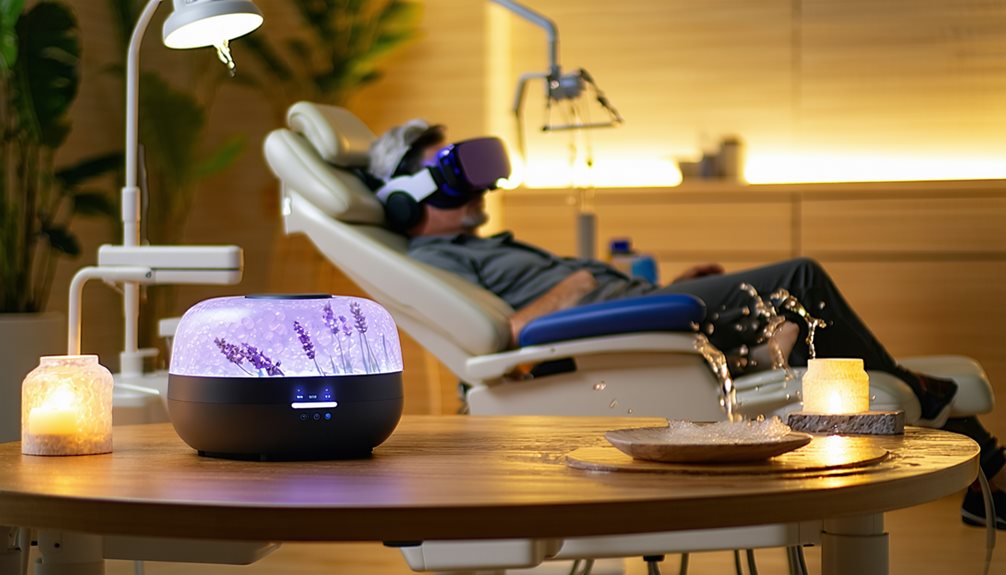
Managing dental anxiety can be attained through several non-invasive approaches, each backed by clinical evidence. Cognitive Behavioral Therapy targets maladaptive thought patterns, enhancing resilience. Guided Meditation focuses on mindfulness, modulating anxiety via breath control. Virtual Reality Distractions offer immersion into calming environments, diverting attention from dental procedures. Music Therapy, through personalized playlists, lowers physiological stress responses. Finally, Aromatherapy uses essential oils such as lavender and chamomile to promote relaxation through olfactory stimulation. These methods collectively assist in creating a more serene dental experience. Discovering the nuances of each treatment can lead to more individualized and effective patient care.
Cognitive Behavioral Therapy
Cognitive Behavioral Therapy (CBT), a cornerstone in psychological interventions, offers a promising approach for managing dental anxiety. This evidence-based modality targets the maladaptive thought patterns and behaviors that perpetuate anxiety, employing techniques such as cognitive restructuring and exposure therapy.
Cognitive restructuring involves identifying and challenging irrational beliefs about dental procedures, replacing them with more balanced, realistic thoughts. This process is instrumental in reducing anticipatory anxiety, empowering patients to approach dental visits with greater equanimity.
Exposure therapy, another pivotal component of CBT, systematically desensitizes individuals to dental stimuli. By gradually exposing patients to dental environments and procedures in a controlled, supportive manner, this technique mitigates the fear response. Through repeated, incremental exposure, patients experience a reduction in anxiety, often resulting in increased willingness to engage in necessary dental care.
The efficacy of CBT in dental anxiety management is well-documented, offering a non-invasive, patient-centered solution that aligns with the innovative demands of contemporary psychological practice.
Incorporating CBT into treatment protocols for dental anxiety not only addresses the immediate symptoms but also fosters long-term resilience in patients. This approach is particularly valuable in promoting sustained engagement with oral healthcare, ultimately enhancing overall well-being.
Guided Meditation Techniques
While cognitive behavioral strategies are well-regarded, guided meditation techniques offer a complementary, non-invasive approach to mitigating dental anxiety. This technique leverages mindfulness exercises to foster a state of calm and psychological readiness among patients. By focusing on the present moment, patients are encouraged to disengage from anticipatory anxiety and catastrophic thinking often associated with dental procedures.
Guided meditation, particularly when combined with breath control, has demonstrated efficacy in reducing physiological arousal. Breath control, as a focal point in meditation, aids in modulating the autonomic nervous system, thereby decreasing sympathetic nervous activity and promoting parasympathetic dominance. This physiological shift results in reduced heart rate and lower blood pressure, contributing to a more relaxed state conducive to dental treatment.
Clinical evidence supports the integration of guided meditation into dental practice. A study published in the Journal of Dental Research indicated that patients who engaged in mindfulness exercises prior to appointments reported notably lower anxiety levels compared to control groups.
This innovative approach not only enhances patient experience but also empowers dental practitioners to deliver care in a more tranquil environment. As dental anxiety continues to be a prevalent barrier to oral health, guided meditation stands as a promising, non-invasive solution.
Virtual Reality Distractions
Building upon the success of mindfulness techniques in alleviating dental anxiety, virtual reality (VR) distractions emerge as another innovative, non-invasive method to enhance patient comfort.
VR technology offers immersive experiences that transport patients to calming virtual environments, effectively reducing their perception of stress and discomfort during dental procedures.
Clinical studies have shown that VR distractions can greatly decrease anxiety levels, improve patient cooperation, and even reduce the need for pharmacological interventions. The effectiveness of VR in mitigating dental anxiety is attributed to its ability to create a sense of presence in an alternative reality, thereby diverting attention away from the clinical setting.
This technique not only enhances the patient experience but also facilitates a more efficient treatment process for dental professionals.
As VR technology continues to advance, the development of tailored dental-specific virtual environments is anticipated, further optimizing this approach.
Embracing such cutting-edge innovations in dental care can lead to a transformative shift in managing dental anxiety, catering to patients’ desire for modern, non-invasive therapeutic options.
Music Therapy Sessions
Music therapy sessions have emerged as a valuable tool in the non-invasive management of dental anxiety, offering a multi-sensory approach to enhance patient relaxation. The strategic use of music therapy can markedly transform the dental experience, creating a calming sound environment that reduces stress and anxiety.
Evidence suggests that carefully curated music selection can lower physiological responses such as heart rate and blood pressure, contributing to a more serene dental visit.
The success of music therapy in dental settings relies on several key factors:
- Personalized Music Selection: Tailoring the music to individual preferences enhances the therapeutic effect.
- Controlled Sound Environment: Utilizing high-quality audio systems guarantees an immersive auditory experience.
- Timing of Music Exposure: Initiating music therapy before the procedure can preemptively mitigate anxiety.
- Integration with Other Relaxation Techniques: Combining music therapy with guided imagery may amplify relaxation effects.
- Patient Feedback and Adjustment: Regular assessment of patient response allows for dynamic adaptation of the music therapy plan.
Innovative approaches in music therapy continue to evolve, offering promising avenues for alleviating dental anxiety.
Aromatherapy for Relaxation
Aromatherapy, a complementary therapy utilizing aromatic plant extracts, has gained recognition in the clinical management of dental anxiety. This modality leverages essential oils, which are concentrated hydrophobic liquids containing volatile aroma compounds, to induce relaxation and alleviate anxiety symptoms.
In dental settings, scent diffusion is employed to disperse these essential oils into the air, creating an olfactory environment that promotes a sense of calm and well-being among patients.
Empirical studies have demonstrated the efficacy of essential oils, such as lavender and chamomile, in reducing anxiety by modulating the limbic system—the brain region associated with emotions and memory. The process of scent diffusion allows for the consistent release of these therapeutic aromas, facilitating a tranquil atmosphere conducive to stress reduction.
This innovative approach to patient care not only enhances the dental experience but also minimizes the need for pharmacological interventions, thereby reducing potential side effects.
Incorporating aromatherapy into dental practice represents a forward-thinking strategy that aligns with contemporary trends in holistic health care. By integrating evidence-based, non-invasive techniques like essential oil diffusion, dental professionals can effectively address the psychological dimensions of dental anxiety, ultimately improving patient outcomes and satisfaction.
Frequently Asked Questions
How Does Dental Anxiety Differ From General Anxiety?
Dental anxiety is specifically linked to dental procedures, whereas general anxiety encompasses broader stressors. Identifying specific triggers and implementing tailored coping strategies can effectively mitigate dental-related fears, enhancing patient experience and promoting innovative, evidence-based anxiety management solutions.
Can Diet Impact Dental Anxiety Levels?
Dietary influences can modulate dental anxiety levels by affecting neurochemical pathways. Nutrition education promoting balanced intake of micronutrients, such as omega-3 fatty acids and magnesium, may reduce anxiety symptoms, fostering an innovative approach to holistic dental care management.
Are There Genetic Factors Linked to Dental Anxiety?
Current research suggests a genetic predisposition may influence dental anxiety, similar to other anxiety disorders. Identifying specific genetic markers could lead to innovative, personalized interventions, enhancing patient care by addressing the underlying biological factors of dental anxiety.
What Role Do Dental Professionals Play in Reducing Anxiety?
Dental professionals play a pivotal role in mitigating anxiety through effective patient communication and the implementation of calming techniques. Evidence-based strategies, such as cognitive-behavioral approaches and personalized care plans, foster a more innovative and patient-centered dental experience.
How Effective Are Support Groups for Managing Dental Anxiety?
Support group dynamics play a pivotal role in managing dental anxiety by fostering shared experiences and collaborative anxiety coping strategies. Evidence-based studies indicate enhanced patient outcomes, demonstrating innovation in psychological support’s efficacy within dental care environments.
Conclusion
The exploration of non-invasive treatments for dental anxiety highlights the potential for cognitive behavioral therapy, guided meditation, virtual reality distractions, music therapy, and aromatherapy to mitigate patient distress effectively. Each modality offers distinct mechanisms to alleviate anxiety, ranging from cognitive restructuring and sensory distraction to relaxation induction. Empirical evidence supports the efficacy of these interventions in reducing anxiety levels, thereby enhancing patient compliance and overall dental care experience. Further research is warranted to optimize their integration into standard dental practice.

